
By DiAnn Mills @DiAnnMills
Writing and research go hand in hand for a credible story. If a manuscript isn’t accurate, the reader will recognize the flaw and toss the book aside. If a writer is spot-on, the extra work rewards them with outstanding reviews and more readers. Sort of a no-brainer for us writers.
How do we conduct our research to add reality effectively and efficiently?
Focus: List what is needed for the writing project in chronological order. This includes setting, characters, dialogue, culture, topic, interviews, and plot points.
Develop: What specialty people need to be contacted to ensure reliable information. Create a list of questions. Many of my books contain characters who have chosen the FBI as their career. Several years ago, when I wanted to use an FBI character, I phoned Houston’s FBI and asked to speak to the media coordinator. That resulted in a friendship that continues today. She answered questions (and cleared me), gave me ideas, invited me to attend the FBI Citizens’ Academy, which provided facts for credible stories. I now also have a contact in the FBI Headquarters DC office who answers my questions.
In addition, I attended Houston’s ATF (Alcohol, Tobacco, and Firearms) Citizens’ Academy with the same amazing results.
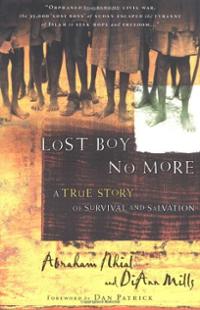
During my writing career, I’ve journeyed to Southern Sudan, ridden the line with the US Border Patrol, interviewed treasure hunters, Texas Marshals, and countless other professionals to add reality to my stories. These people love to talk about what they do. They also want the public to have accurate information for community support beyond the often-fictionalized TV, movie, and book depictions. And I’ve never been turned away. Well, there was that one time, but we’ll not go into that—LOL.
The following questions and suggestions help me focus, develop, and map out my books. If you are a writer, these may help you too.
- Visit the area’s chamber of commerce.
- Conduct a web search of the area. Some apps will help you with this: Google Maps, Google Earth, Weather Bug, or travel sites that can be found via apps or websites.
- Take or download more pictures/videos than you think you’ll ever use. *Remember if online images are used beyond personal research, use pixabay.
- Interview people living in the area. For a historical setting, this also means reading diaries and journals. How has history affected the community?
- Listen to how local people talk. Do they use a distinct vocabulary? Journal these distinctions. Ask permission to record dialogue for later playback.
- What are the community’s values and expectations for life and for each other?
- What is their diet? How much of their food supply is local?
- How is the area governed?
- What are the local hotels? Restaurants? What’s featured on the menus? Any daily specials?
- What are the sources of entertainment?
- How do the residents celebrate holidays?
- Does the community have special festivals?
- How does the area experience the seasons, and what are average temperatures?
- What are the medical concerns? What kind of medical care is available?
- In what kinds of homes do they live?
- Where do they shop?
- How do the people dress?
- Do the arts play a vital role in the community?
- How do locals view education, sports teams, and favorite colleges?
- How do the residents earn a living?
Other Considerations
- If the area is near a national or state park, look for research material in the visitor centers.
- Discover the wildlife and birds of the region.
- Study the types of trees and wildflowers.
- Locate a map of the area.
- Visit the local library. View newspaper archives.
- Is there a museum in the region that you can visit?
- Does politics play a role?
- What churches and other religious affiliations are in the area?
- Look for documentaries about the area.
- What are the people’s joys?
- What do people fear?
When writers are cognizant of what they need to make a manuscript zip with authenticity, readers clamor for more.
Do you have research suggestions?


Thanks Di Ann
I am working hard at weeding my manuscript, so that I can introduce it in a few months. I agree with all your points, but especially regarding research. Even though the background is based mostly in my birth country, I have been researching all the subects and topics included in my Inspirational Nonfiction manuscript. I have been weeding, adding, omitting, replacing, and weeding agian. I have some ways to go yet, in terms of readiness, but it is beginning to look hopeful.
I slipped on ice nearly two months ago, broke my taibone, could not go to work, and was apartment- bound, and frustrated. In retrospect, this was an opportunity to hone my manscript.
Frances
I’m glad the article gave you insight. BUT I’m sorry you fell. In hindsight, God showed you how to work on your manuscript. We never know how God plans to work the not-so-good for His good. Blessings.
Thanks for your reply, Di Ann. That is so true.
So true Ms. DiAnn. Nothing turns me off faster than when something doesn’t pass the “sniff test.” If I know something can’t be done that way (e.g. a shot that a trained marksman would never attempt), then the story (movie, book, etc.) loses credibility. As soon as that happens, I tune out.
J.D., I like your definition of the “sniff” test. When I’m disappointed in a story’s research, I go on to the next book.
Hi, DiAnn. This was a very helpful blog to me. I am a struggling “newby” in writing. My favorite genres are Historical Fiction and Mystery/Crime novels. Because this cannot be a fulltime job as a writer, I have struggled knowing how to research specifics for my book plan. For example, I need more information on New Orleans during the late 1940s and how to document dialogue in the creole so that it is accurate and believable. Also I need to figure out the city layout during that time and the differences in culture, beliefs, and general way of life there. Since I cannot go there due to a regular full time job, how do I research all of this. I am afraid of failure. I have self published one book (fiction) which did not sell well, although part of that was due to lack of getting it publicized. I don’t want to give up on writing. Research is important, I realize, but how much does one need to make the story believable without getting burred in unnecessary information? I value your knowledge and experience.
Hi Cindy
I’m honored to help you. First, contact the main library in New Orleans. Ask to speak to whoever is in charge of research. Also ask for recommendations for other research opportunities in New Orleans. Museums, home tours, and the chamber of commerce can help you too. Always research more than what you need but enough so that when others ask: 1. this way you’re considered a professional, and 2. a writer wants to be in the character’s head. So by researching more than is needed, you, as the writer, are more aware of info even if those items aren’t used. But there is always a limit to how much research has been done vs it’s time to write.
WOW! It takes a LOT OF WORK to write a story, and you do it SO well! Thanks for all your hard work. Love your stories:))
Oh, thank you, Vondia. You are such a great encourager!